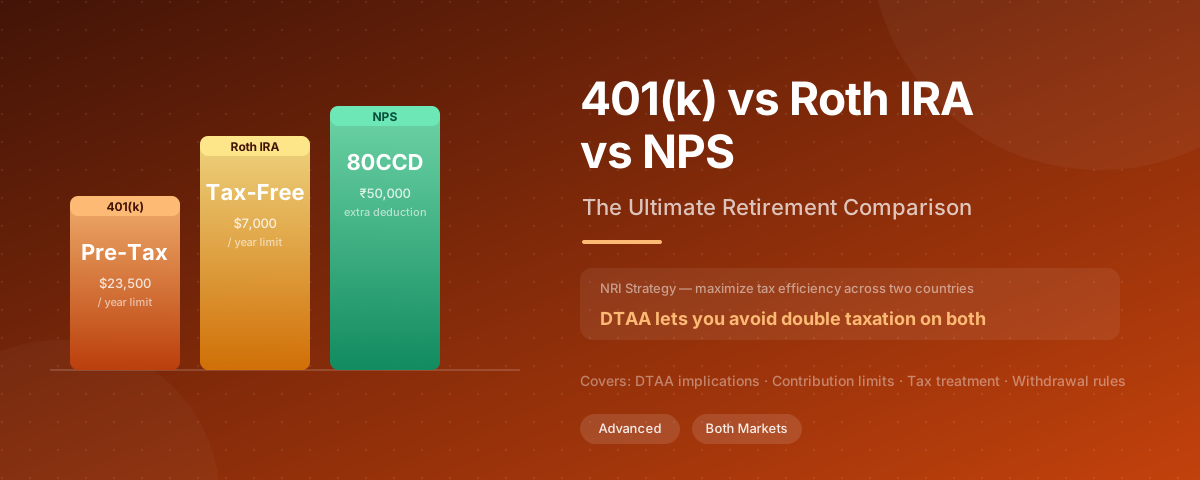
If you're an Indian working in the US — or planning to return to India — you face a unique retirement challenge: managing accounts in two different countries with two different tax systems. Understanding the 401(k), Roth IRA, and India's NPS is essential.
Quick Comparison
| Feature | 401(k) | Roth IRA | NPS (India) |
|---|---|---|---|
| Tax on Contribution | Pre-tax (reduces taxable income) | After-tax | Pre-tax (80C + 80CCD) |
| Tax on Growth | Tax-deferred | Tax-free | Tax-deferred |
| Tax on Withdrawal | Taxed as income | Tax-free (qualified) | Partial tax-free |
| 2024 Contribution Limit | $23,000/year | $7,000/year | ₹1.5L (80C) + ₹50K |
| Employer Match | Yes, typically 3–6% | No | Yes (NPS Corporate) |
| Withdrawal Age | 59½ (penalty-free) | 59½ + 5yr rule | 60 years |
| Premature Withdrawal | 10% penalty + tax | Contribution anytime, earnings at 59½ | Partial allowed |
401(k): The US Workhorse
The 401(k) is the backbone of US retirement planning. The employer match is essentially free money — always contribute enough to get the full match. A 6% match on a $100,000 salary = $6,000/year free.
💡 Pro Tip: Priority order: 1) Contribute enough to 401(k) to get full employer match. 2) Max out Roth IRA ($7,000). 3) Max out 401(k) remaining ($23,000 limit). 4) Invest in taxable brokerage.
Roth IRA: Tax-Free Retirement Wealth
The Roth IRA is arguably the most powerful retirement account for younger earners. You pay tax now and never pay tax again — no RMDs (Required Minimum Distributions), tax-free growth, tax-free withdrawals.
Income limits for 2024: You cannot contribute directly to a Roth IRA if your MAGI exceeds $161,000 (single) or $240,000 (married). High earners use the "Backdoor Roth IRA" — contribute to Traditional IRA, then convert.
NPS: India's Structured Retirement Scheme
NPS offers up to ₹2 lakh/year in tax deductions: ₹1.5 lakh under 80C and an additional ₹50,000 under 80CCD(1B). At maturity (60), 60% is tax-free lump sum; 40% must be used for annuity (taxable).
The NRI Challenge: DTAA & Dual Taxation
India-US DTAA (Double Taxation Avoidance Agreement) governs which country taxes which income. Key points for NRIs:
- 401(k) withdrawals in the US: taxed in US. India may also tax if you are a tax resident of India — DTAA credit applies
- NPS: India taxes at source. If you're a US tax resident, the US may tax too — claim foreign tax credit
- Roth IRA: US treats withdrawals as tax-free. India may classify as income for Indian tax residents
- FBAR filing: NRIs with Indian financial accounts > $10,000 must file FBAR (FinCEN 114) annually
Recommended Strategy for NRIs
- While in US: Max 401(k) match → Max Roth IRA → Additional 401(k)
- If planning to return to India: Prefer Roth (tax-free US growth)
- Maintain NPS Tier-1 (keep it alive for India retirement, low contribution ok)
- Before returning to India: Understand RNOR status (up to 3 years of being a Resident but Not Ordinarily Resident, where foreign income may be exempt)
- Consult a cross-border tax advisor for DTAA planning
⚠️ Important: Tax laws change frequently. The DTAA article numbers referenced by tax professionals may be interpreted differently. Always consult a DTAA-specialist CA or CPA before making large retirement account decisions.